Tutorial: View Routines and Activities for IFSP Meetings
Use this tutorial to view the daily routines and activities details for IFSP meetings on the IFSP Meetings page.
Complete the following steps to perform this tutorial:
-
Display the IFSP Meetings page.
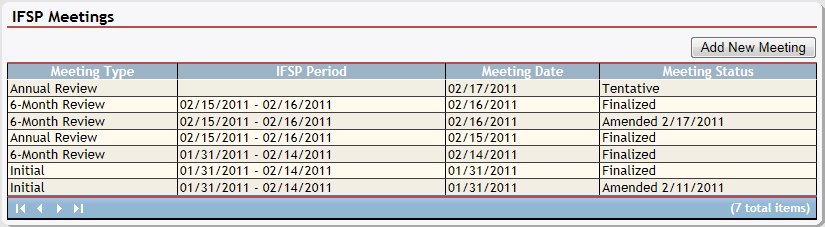
IFSP Meetings page (default view)
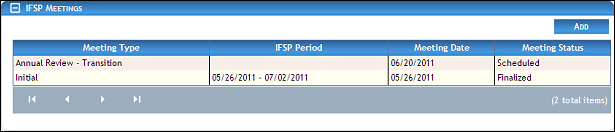
IFSP Meetings page (default view) for Coordinator/District roles

IFSP Meetings page (default view) for Provider/State roles
|
NOTE: This page contains collapsible data. Sections can be collapsed by clicking the [-] beside the section heading. Click the [+] to expand the section. Depending on the method of access and your current permissions, the page displays differently and some information may be disabled or unavailable. |

-
Double-click on a meeting in the IFSP Meetings table. The page refreshes and displays detailed information below the table.
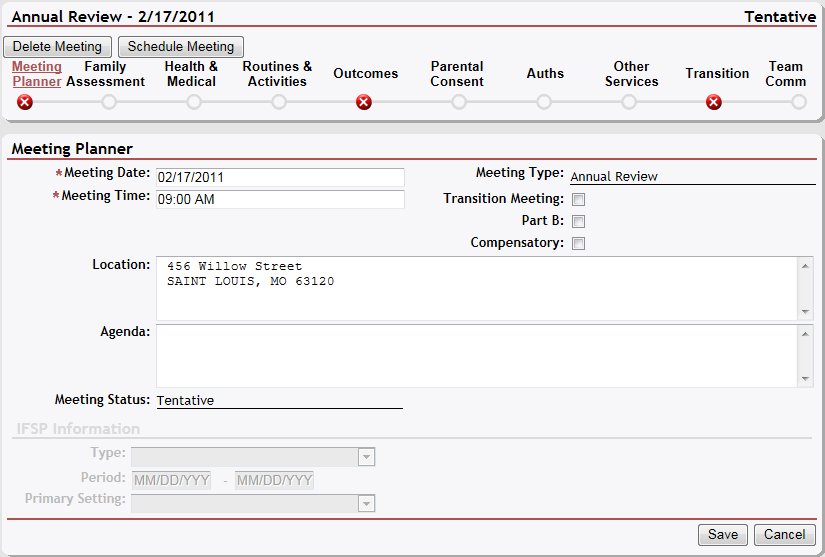
IFSP Meetings page (meeting planner view)
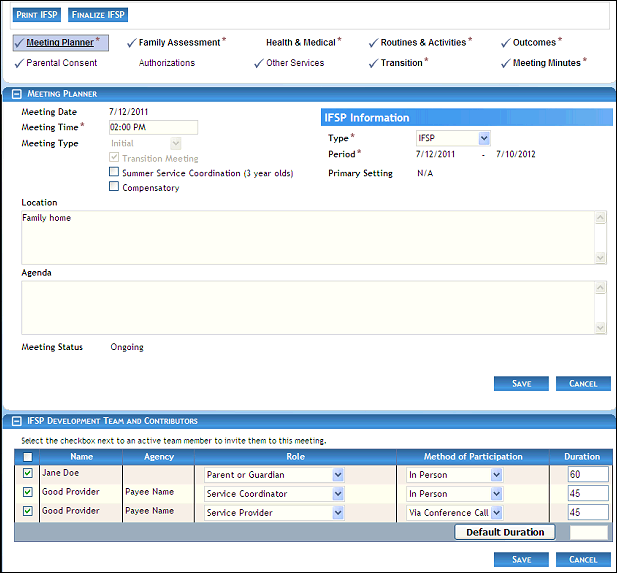
IFSP Meetings page (meeting planner view) for Coordinator/District roles
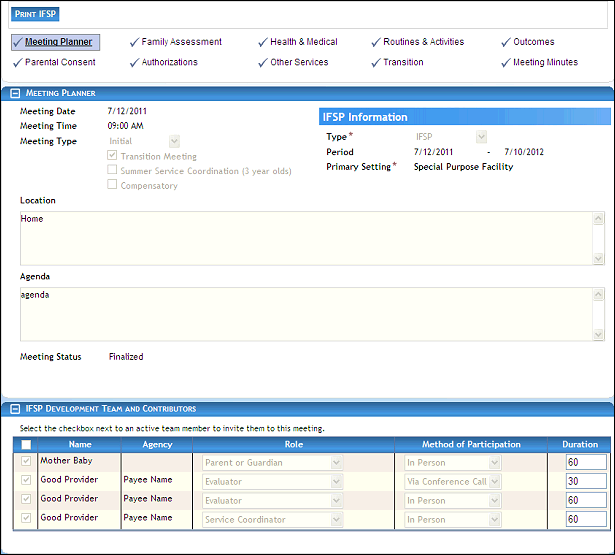
IFSP Meetings page (meeting planner view) for Provider/State roles
-
View the selected meeting date and status in the IFSP Meetings section heading.
-
Click the Routines & Activities link. The page refreshes and displays additional fields for entry.
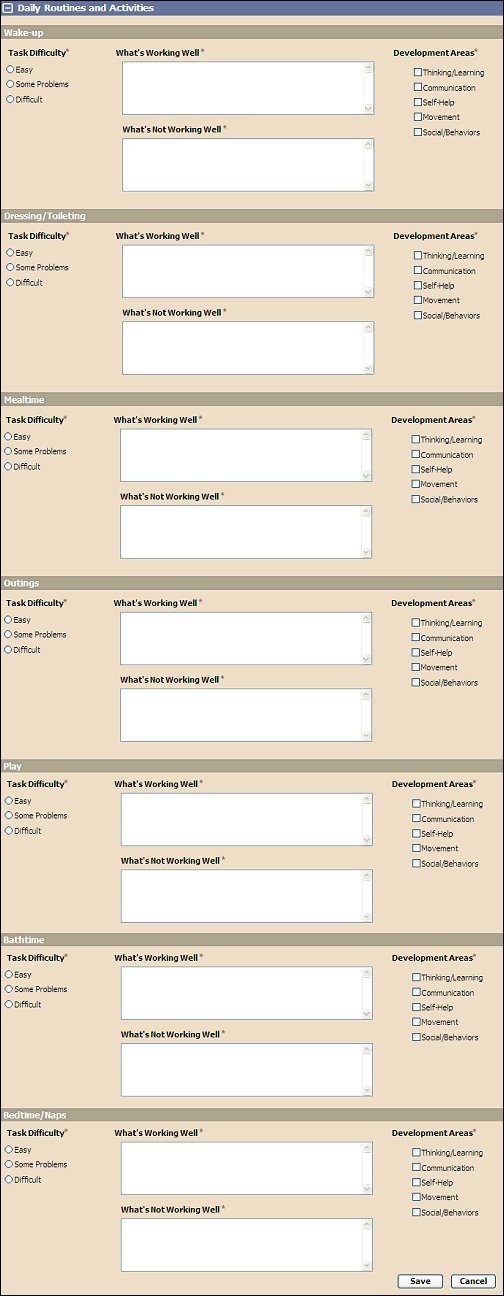
IFSP Meetings page (routines and activities view)
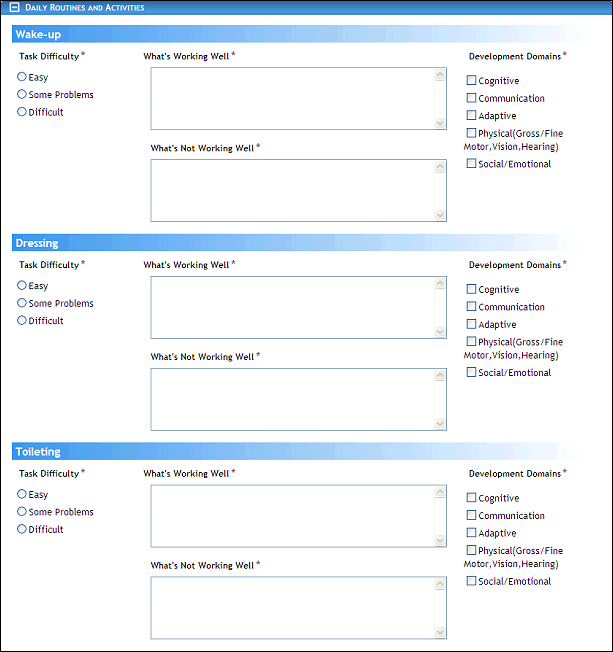
IFSP Meetings page (routines and activities view) for Coordinator/District roles
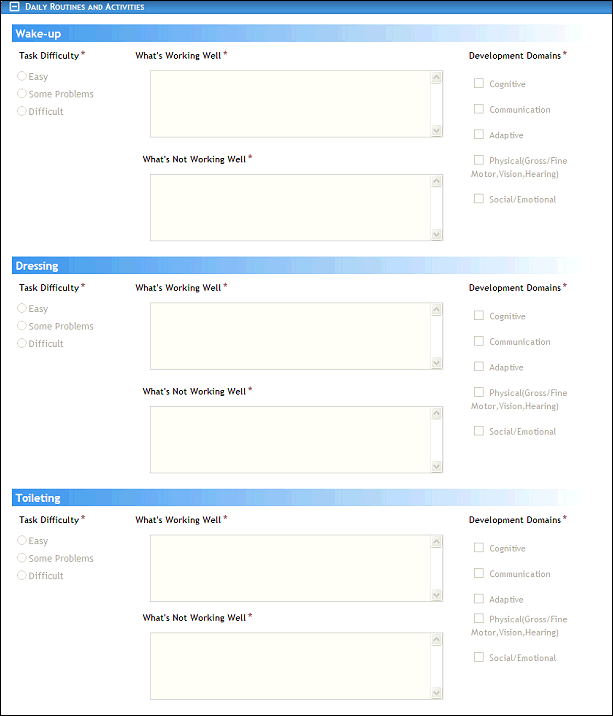
IFSP Meetings page (routines and activities view) for Provider/State roles
-
View the details in the following sections:
The Wake-up section contains information on how the child responds to the daily wake-up routine:
Task Difficulty indicates how well the person handles the routine or activity.
What's Working Well displays positive details about how the person handles the routine or activity.
What's Not Working Well displays areas for improvement or negative details about how the person handles the routine or activity.
Developmental Domains indicates which developmental functions are affected by or can be improved for this routine or activity.
The Dressing section contains information on how the child responds to the daily dressing:
Task Difficulty indicates how well the person handles the routine or activity.
What's Working Well displays positive details about how the person handles the routine or activity.
What's Not Working Well displays areas for improvement or negative details about how the person handles the routine or activity.
Developmental Domains indicates which developmental functions are affected by or can be improved for this routine or activity.
The Toileting section contains information on how the child responds to the daily toilet-training routine:
Task Difficulty indicates how well the person handles the routine or activity.
What's Working Well displays positive details about how the person handles the routine or activity.
What's Not Working Well displays areas for improvement or negative details about how the person handles the routine or activity.
Developmental Domains indicates which developmental functions are affected by or can be improved for this routine or activity.
-
View the details in the following sections:
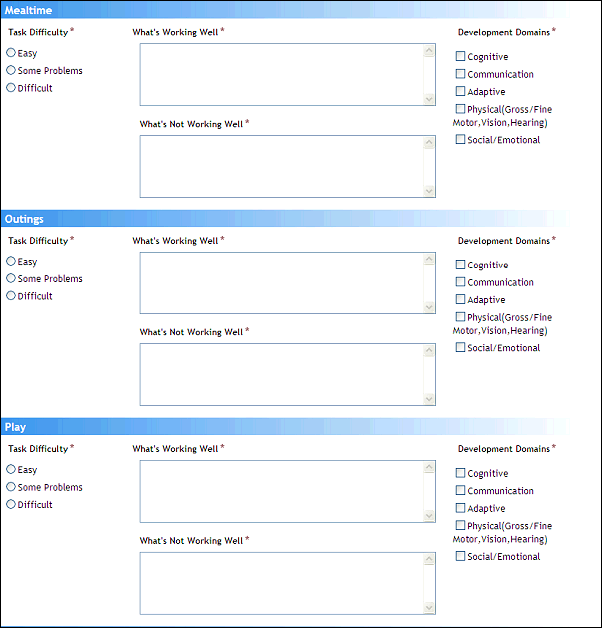
IFSP Meetings page (routines and activities view) for Coordinator/District roles
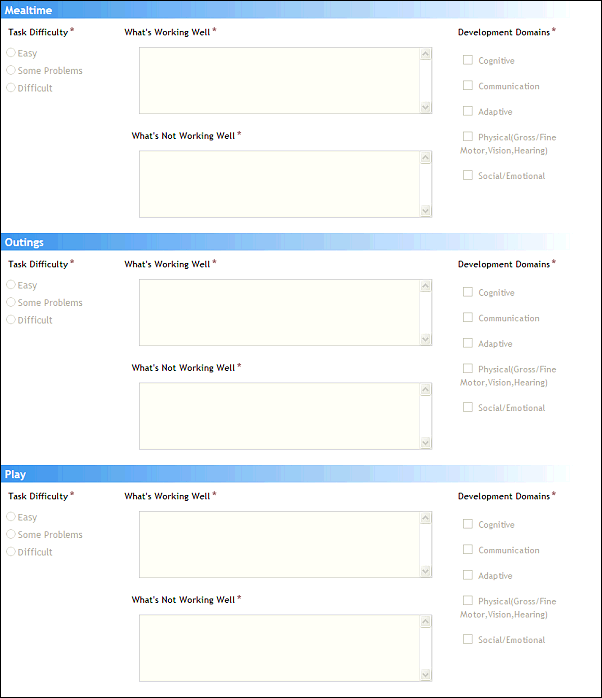
IFSP Meetings page (routines and activities view) for Provider/State roles
The Mealtime section contains information on how the child responds to daily mealtime routines:
Task Difficulty indicates how well the person handles the routine or activity.
What's Working Well displays positive details about how the person handles the routine or activity.
What's Not Working Well displays areas for improvement or negative details about how the person handles the routine or activity.
Developmental Domains indicates which developmental functions are affected by or can be improved for this routine or activity.
The Outings section contains information on how the child responds to trips outside the home:
Task Difficulty indicates how well the person handles the routine or activity.
What's Working Well displays positive details about how the person handles the routine or activity.
What's Not Working Well displays areas for improvement or negative details about how the person handles the routine or activity.
Developmental Domains indicates which developmental functions are affected by or can be improved for this routine or activity.
The Play section contains information on how the child responds to the playtime activities:
Task Difficulty indicates how well the person handles the routine or activity.
What's Working Well displays positive details about how the person handles the routine or activity.
What's Not Working Well displays areas for improvement or negative details about how the person handles the routine or activity.
Developmental Domains indicates which developmental functions are affected by or can be improved for this routine or activity.
-
View the details in the following sections:
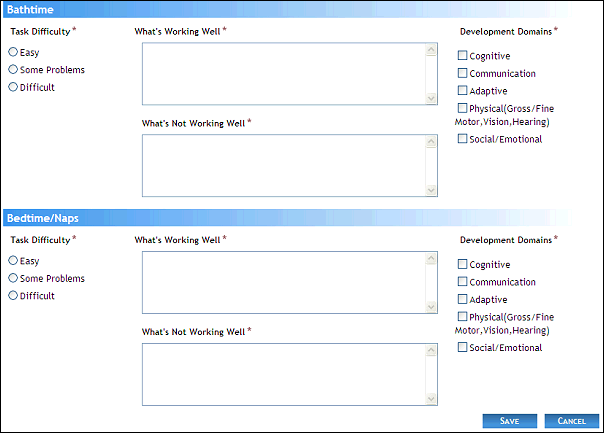
IFSP Meetings page (routines and activities view) for Coordinator/District roles
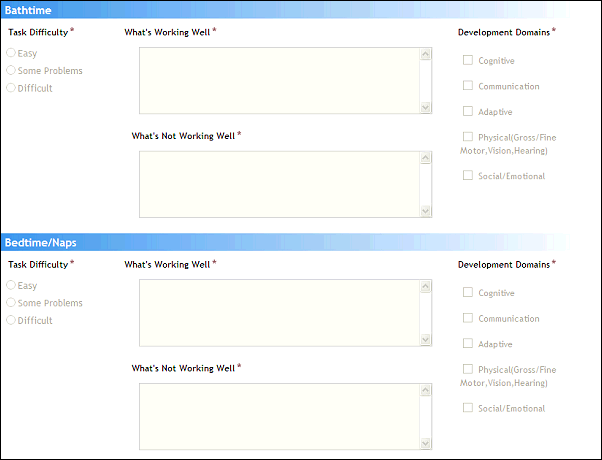
IFSP Meetings page (routines and activities view) for Provider/State roles
The Bathtime section contains information on how the child responds to the bathing routine:
Task Difficulty indicates how well the person handles the routine or activity.
What's Working Well displays positive details about how the person handles the routine or activity.
What's Not Working Well displays areas for improvement or negative details about how the person handles the routine or activity.
Developmental Domains indicates which developmental functions are affected by or can be improved for this routine or activity.
The Bedtime/Naps section contains information on how the child responds to the daily bedtime and nap routine:
Task Difficulty indicates how well the person handles the routine or activity.
What's Working Well displays positive details about how the person handles the routine or activity.
What's Not Working Well displays areas for improvement or negative details about how the person handles the routine or activity.
Developmental Domains indicates which developmental functions are affected by or can be improved for this routine or activity.
Version 1.6